User Guide
Step-by-step tutorials for every part of Zeit. Each one starts with what the method is for and a real output, explains how it works in plain language, then walks through the code and how to read the results.
New here?
Do the Quickstart first, and skim Core Concepts for the conventions (array shapes, dates, scale factors) that every tutorial uses. Unsure which method fits your question? See Choosing an Algorithm.
Change detection
Find where and when the land surface changed.
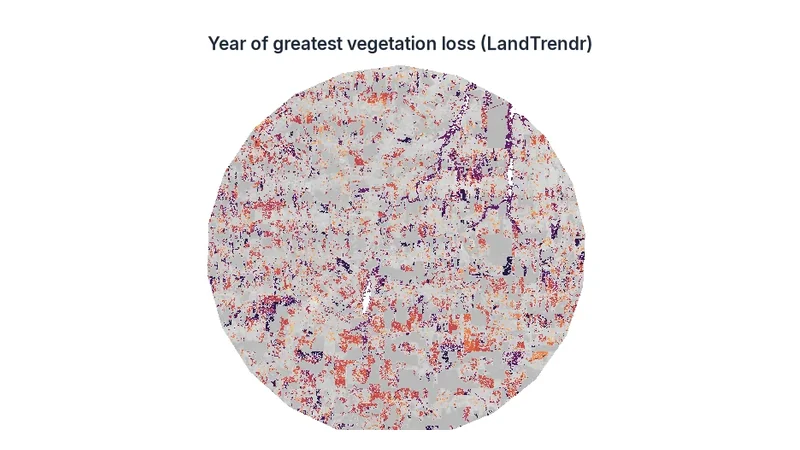
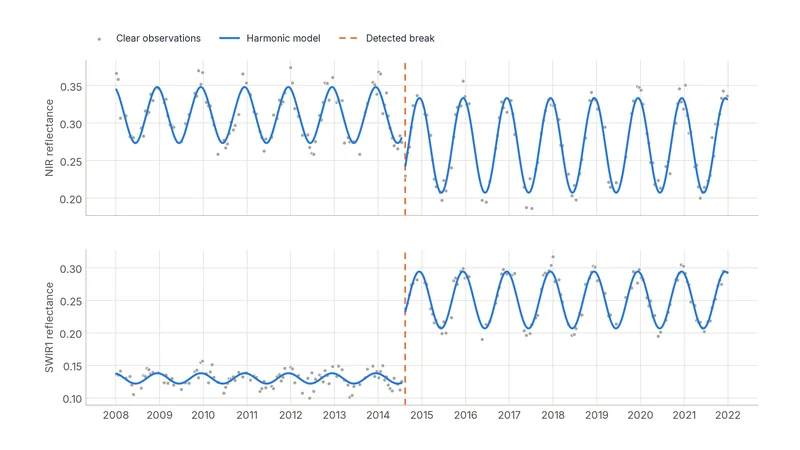
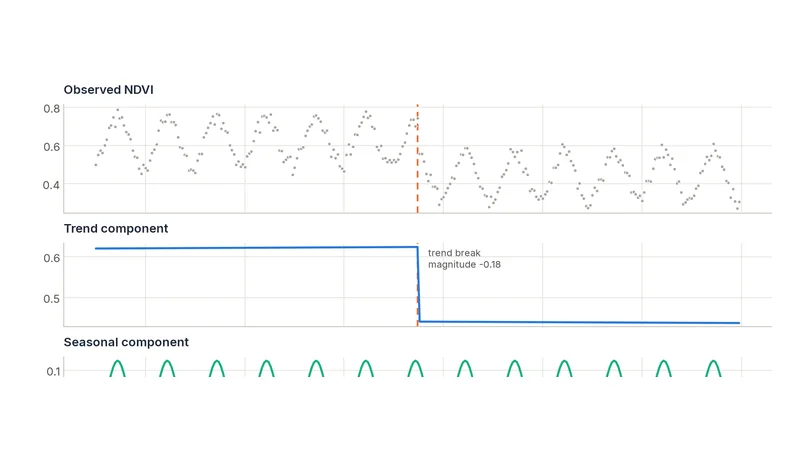 Regular seriesBFASTSeparate breaks in the trend from breaks in the seasonal cycle.
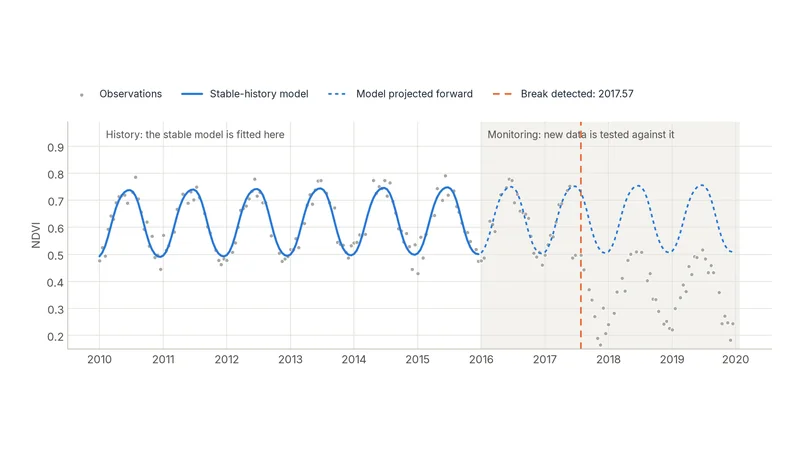
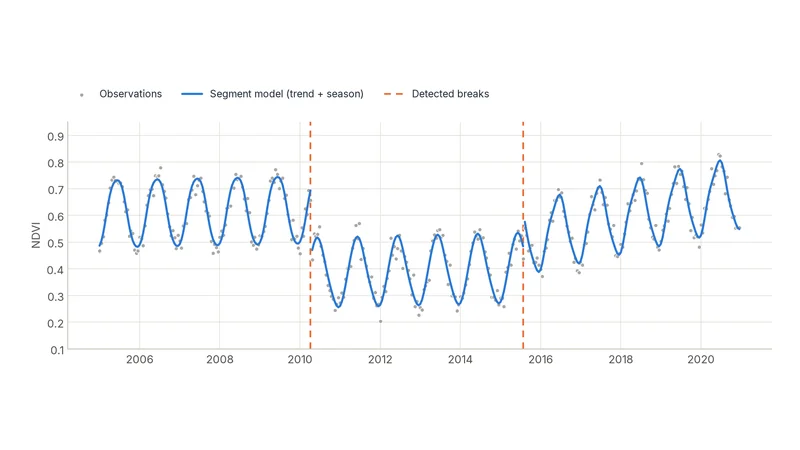 Regular seriesBFAST LiteThe optimal number of breaks in a whole series, in a single fast pass.
Time-series analysis
Trends, seasons, patterns and objects.
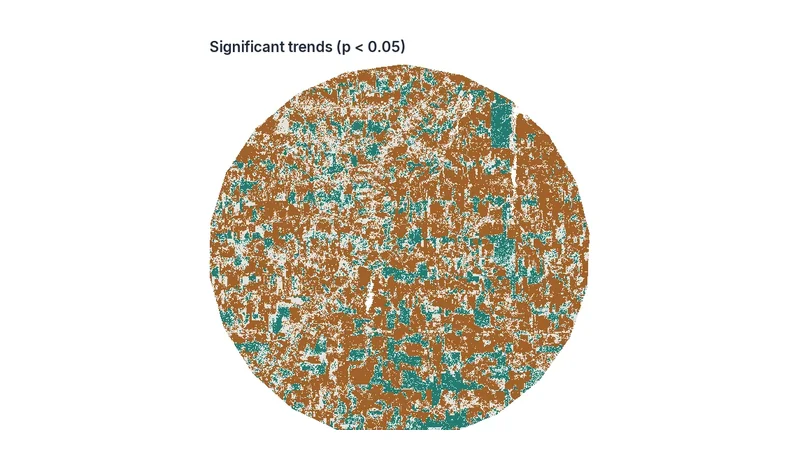 TrendsMann-KendallSignificant greening and browning, with a robust slope per pixel.
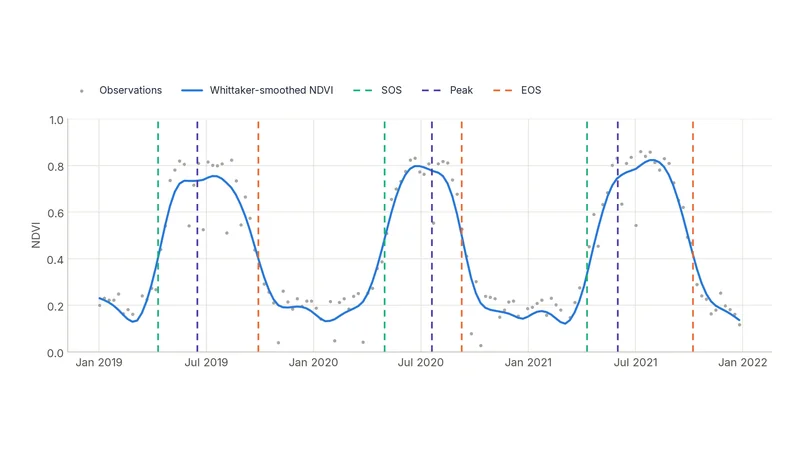 SeasonsPhenologyStart, peak and end of every growing season, and 16 more metrics.
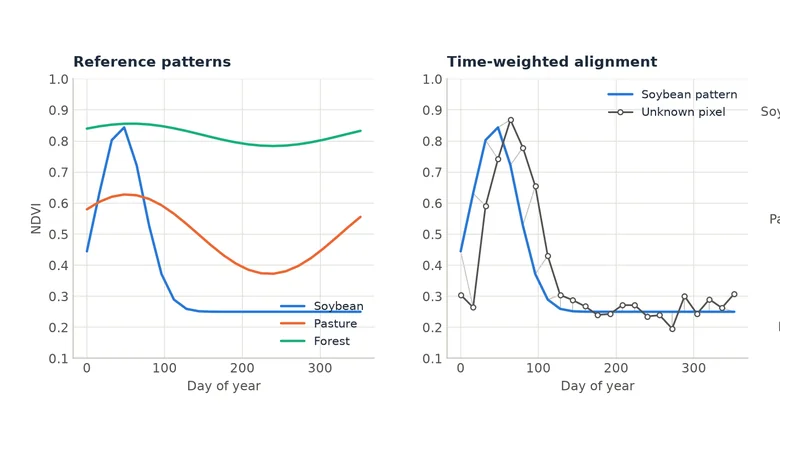 ClassificationTWDTWMatch each pixel to reference patterns, tolerating shifts in timing.
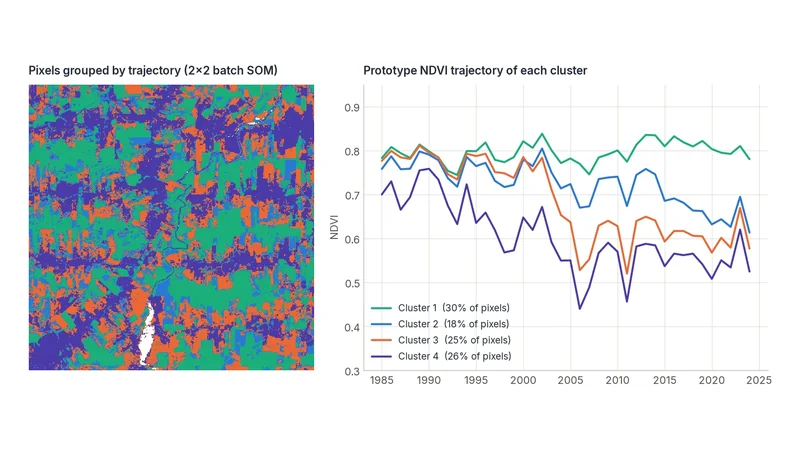 ClusteringSOMFind the typical trajectories in a landscape without labels.
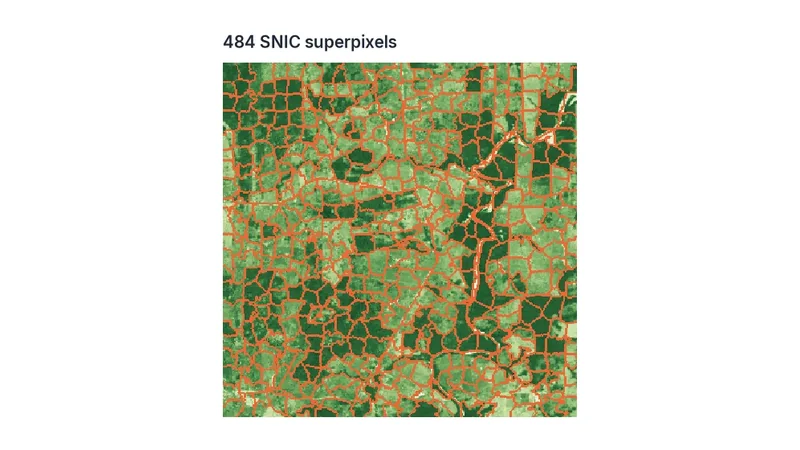 SegmentationSNICGroup pixels with similar histories into fields and patches.
Deep learning
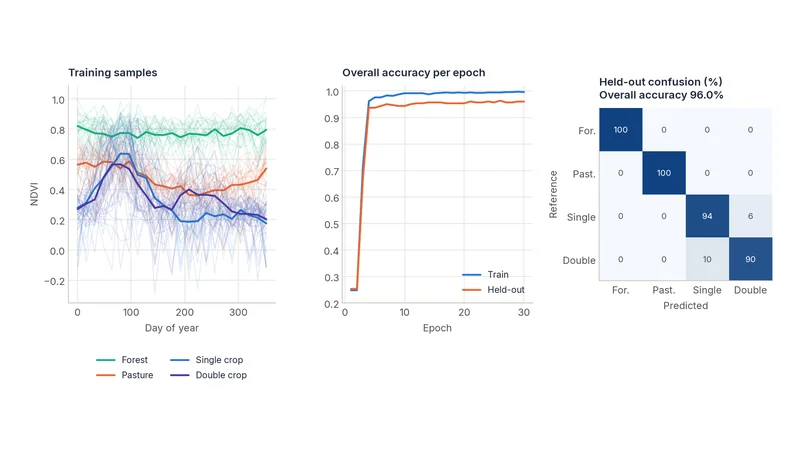
PyTorch models for classification and change detection, weight-compatible with their reference implementations.
| Model | Task | Tutorial |
|---|---|---|
| Overview | Available models, data loading, loss functions | Deep Learning |
| TempCNN | Pixel time-series classification (convolutional) | TempCNN |
| LTAE / LightTAE | Pixel time-series classification (attention) | LTAE & LightTAE |
| U-TAE | Segmentation of whole image patches over time | UTAE |
| Siamese | Change detection between two dates | Siamese Change Detector |
| GeoFoundationViT | Fine-tuning pretrained foundation models | GeoFoundationViT |
Getting and preparing data
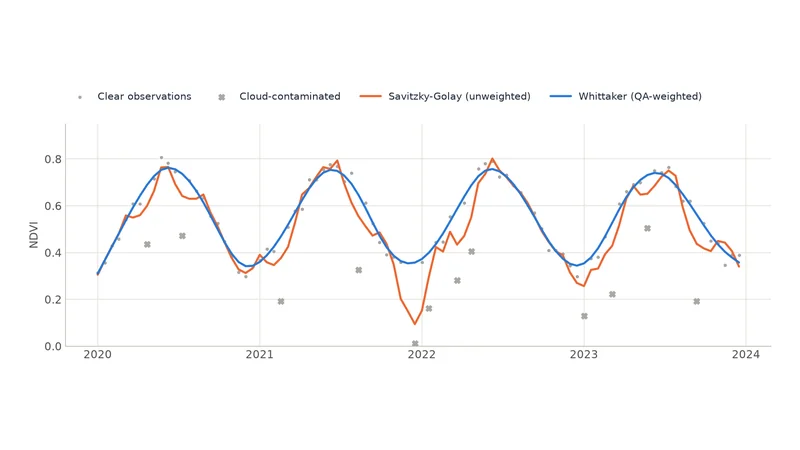
- Plotting & Exploring Results:
zeit.plotfor maps, dense time series and pixel fits, in a notebook or a window. - Google Earth Engine: harmonised Landsat composites prepared on Google's servers.
- Embeddings (TESSERA, AlphaEarth): the yearly embeddings of foundation models as a cube: classify from few samples, find similar places, follow change year to year.
- Parallel & Cloud Processing: from one core to a cluster, with Dask and Zarr.